Mantis Ropeway Technologies, a Zurich-based engineering company that designs autonomous ropeway systems, needed industrial monitoring software that could match the safety demands of unattended transport operations. This case study covers the operational problem Mantis Ropeway Technologies faced, the custom dashboard DevITGroup built to solve it, and the results that followed.
Challenge
Mantis Ropeway Technologies' autonomous systems carry passengers without an on-site driver, which places the entire safety function on remote monitoring staff. Under the company's existing setup, every shift required two human operators on duty at all times to meet this responsibility. One operator alone could not reliably track every ropeway's condition because the monitoring surfaces were fragmented across separate screens and systems, each showing a different slice of sensor data: cable tension, drive motor temperature, wind speed, cabin position and door status all lived in different views.
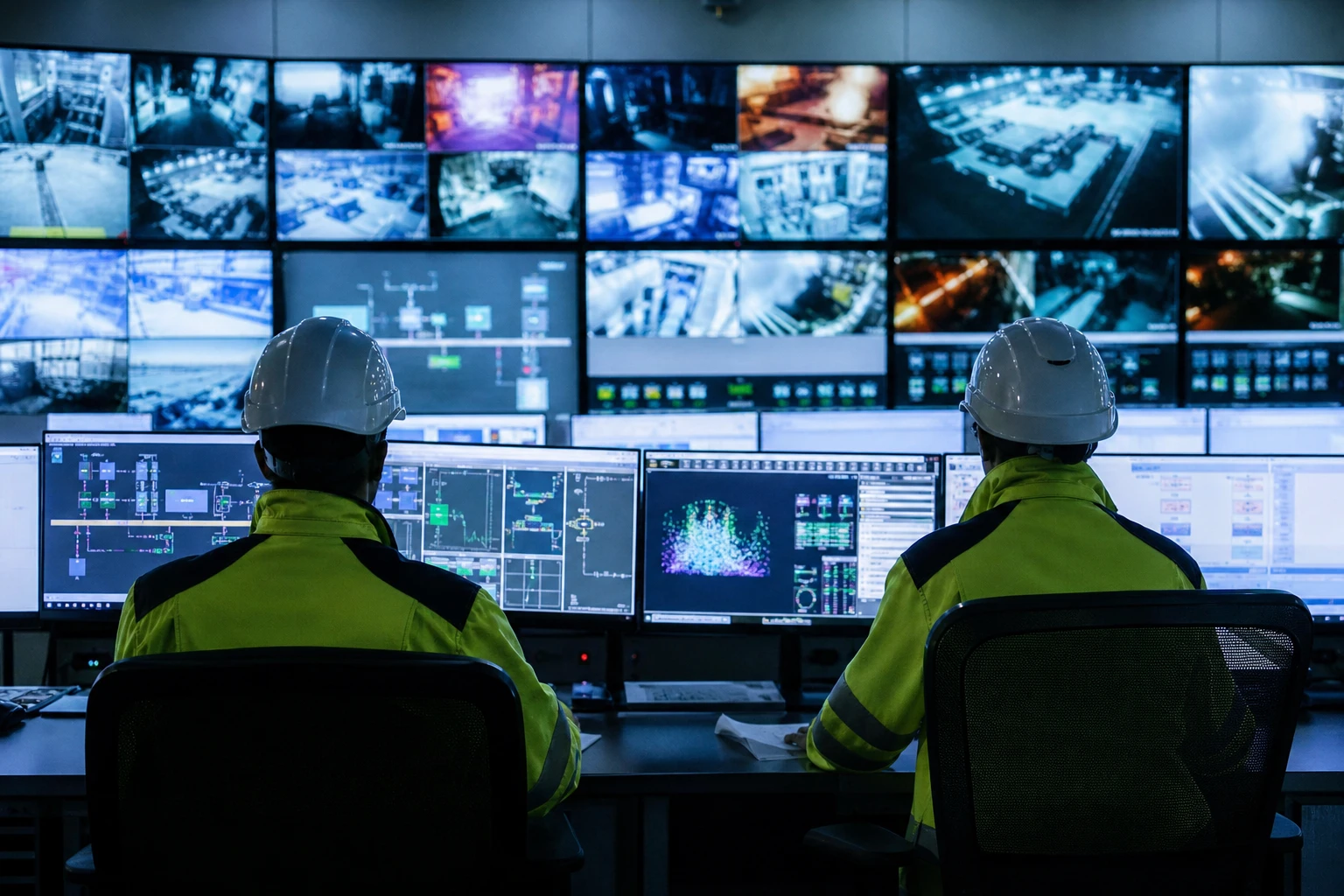
Operators had to read these sensor values manually and judge, on their own experience, whether a reading signalled a developing fault. The systems offered no automated anomaly detection, so every judgement call rested on a person noticing a drift in a number before it became a safety event. That manual workload produced alert fatigue: frequent low-priority notifications trained operators to tune out warnings, raising the risk that a genuine fault would be missed among routine ones.
Mantis Ropeway Technologies evaluated off-the-shelf SCADA software, but standard SCADA platforms are built for generic industrial processes, not the specific sensor combinations and failure patterns of autonomous ropeway systems. They still presented raw data across multiple panels and still relied on the operator to interpret it, so they preserved the same two-person requirement instead of removing it. Mantis Ropeway Technologies needed a single, unified system that could consolidate every sensor feed, flag abnormal conditions automatically, and let one operator monitor a ropeway safely and within Swiss regulatory requirements. That requirement became the brief DevITGroup was asked to deliver.
Solution
DevITGroup designed a single AI operator dashboard to replace the scattered monitoring tools that Mantis Ropeway Technologies' engineers had relied on across separate installations. Instead of switching between disconnected screens for sensor telemetry, fault logs and maintenance records, operators now work from one consolidated live view that pulls real-time data from every autonomous ropeway system into a shared interface.
At the core of the dashboard sits an AI anomaly detection layer that continuously analyses live sensor streams, looking for deviations in vibration, tension, speed and temperature readings that would otherwise require a trained eye watching several displays at once. When the system flags an irregularity, it does not simply raise a generic alert. DevITGroup built an automated alerting model that ranks each event by severity, so a minor deviation appears as a low-priority note while a safety-critical fault surfaces immediately and demands attention first.
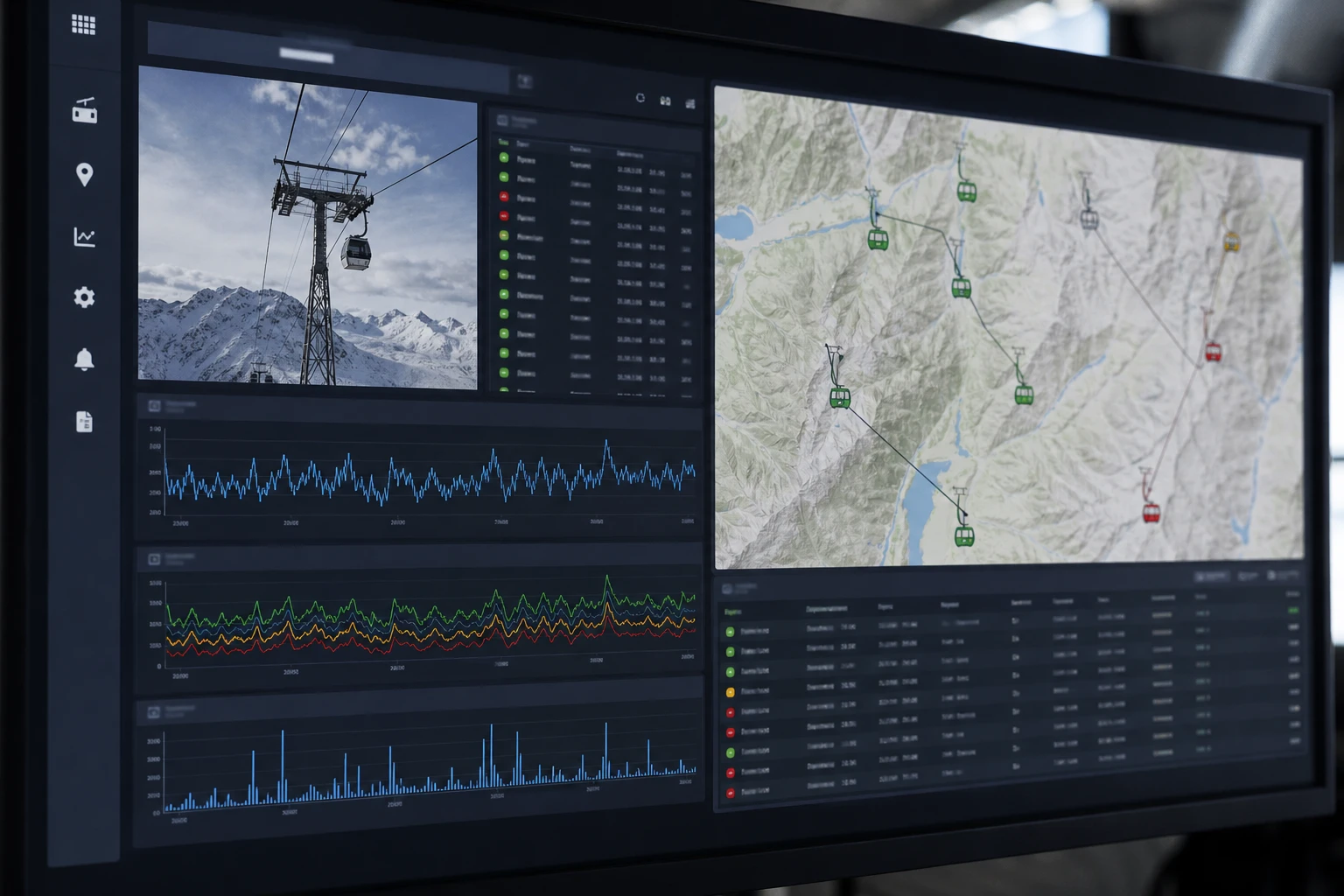
This prioritisation was the key design decision behind consolidating multiple monitoring surfaces into one screen: a single operator can only act on what the dashboard surfaces clearly, so the interface had to do the triage work that several people once did manually. The severity model preserves the safety guarantees of the original multi-operator setup by ensuring that critical alerts always take visual and procedural precedence over routine status updates.
The dashboard also studies historical sensor patterns to generate predictive maintenance signals, giving engineers advance notice of components likely to need attention before a fault occurs.
Results
The AI operator dashboard changed how Mantis Ropeway Technologies staffs and runs safety monitoring. Where two operators once had to watch ropeway systems for anomalies, one operator now handles the same oversight from a single screen. The dashboard consolidates data from across all ropeway systems into one real-time view, so the operator no longer has to move between separate monitoring points to build a full picture of system status.
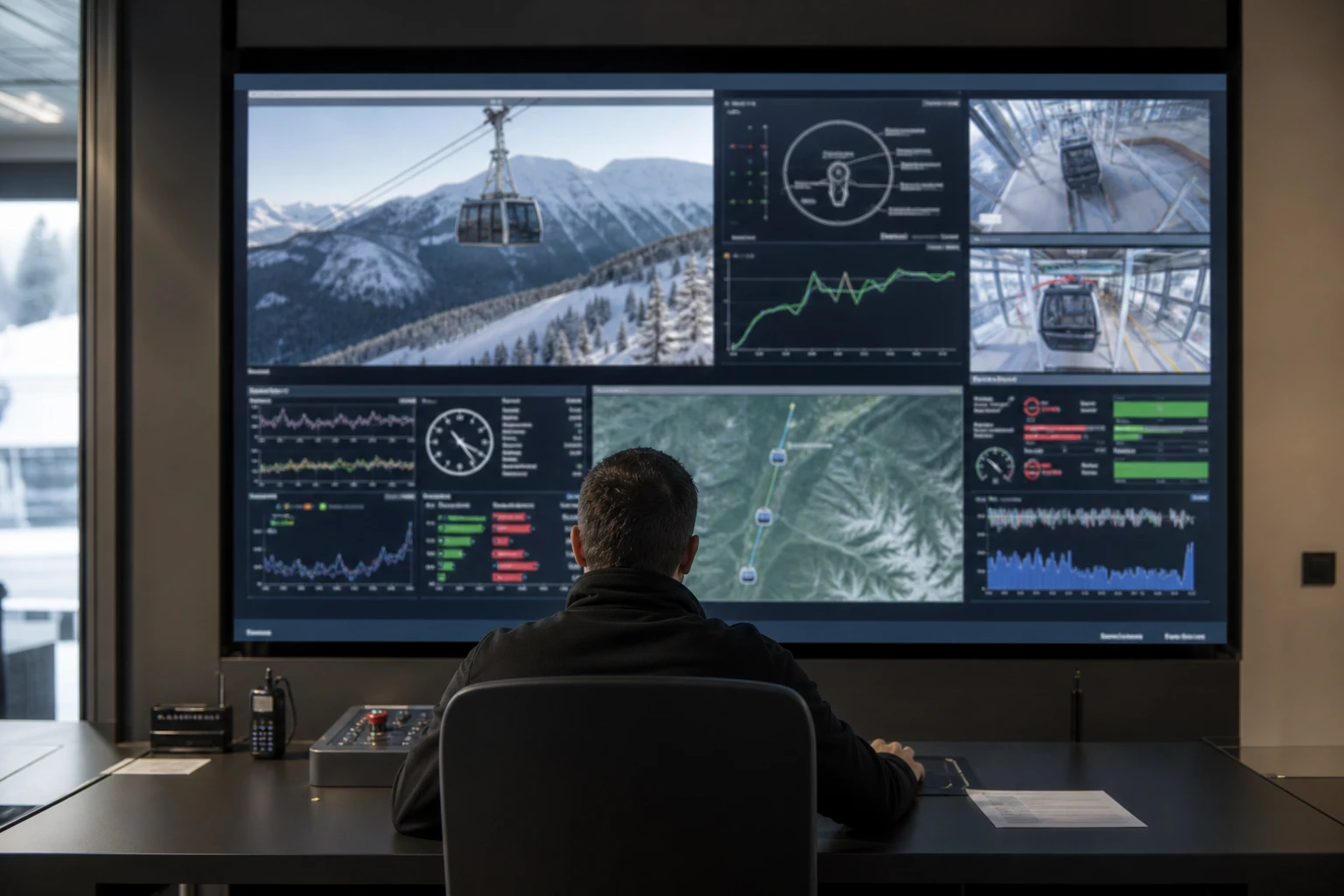
AI anomaly detection improves the accuracy of safety monitoring beyond what manual observation alone could achieve. The system flags irregular patterns in ropeway behaviour as they emerge, giving the operator a clearer signal of when something needs attention rather than relying on continuous manual review of raw data.
Operational impact
Reducing the required headcount from two operators to one lowers staffing cost per installation. Faster detection of anomalies through AI monitoring shortens the time between an irregularity occurring and an operator responding to it. The combination of consolidated visibility and automated anomaly detection also reduces the number of signals that go unnoticed compared with manual observation, strengthening the overall reliability of safety monitoring across the ropeway network.
Technologies Used
DevITGroup built the backend services in .NET, chosen for its reliability under continuous industrial workloads and its strong support for the multithreaded processing a live monitoring system demands. The core of the system is a real-time data processing pipeline that ingests telemetry from ropeway sensors as it is generated, rather than on a polling or batch schedule, so operators see conditions as they change.
On top of this pipeline, DevITGroup deployed AI/ML models trained to spot anomalies in the sensor streams: deviations in vibration, load, speed or tension that fall outside expected operating patterns. These models run continuously against the live data, flagging irregularities for review instead of requiring an operator to watch every reading manually.
The pipeline and models feed a custom web dashboard that renders live sensor data for operators, giving them a single interface instead of raw feeds from separate instruments. The system integrates with Mantis Ropeway Technologies' existing industrial sensor infrastructure and SCADA software, so the new monitoring layer works alongside equipment already installed on the ropeway rather than replacing it.